CALL US NOW +971 55 2008296 | 02 6395477

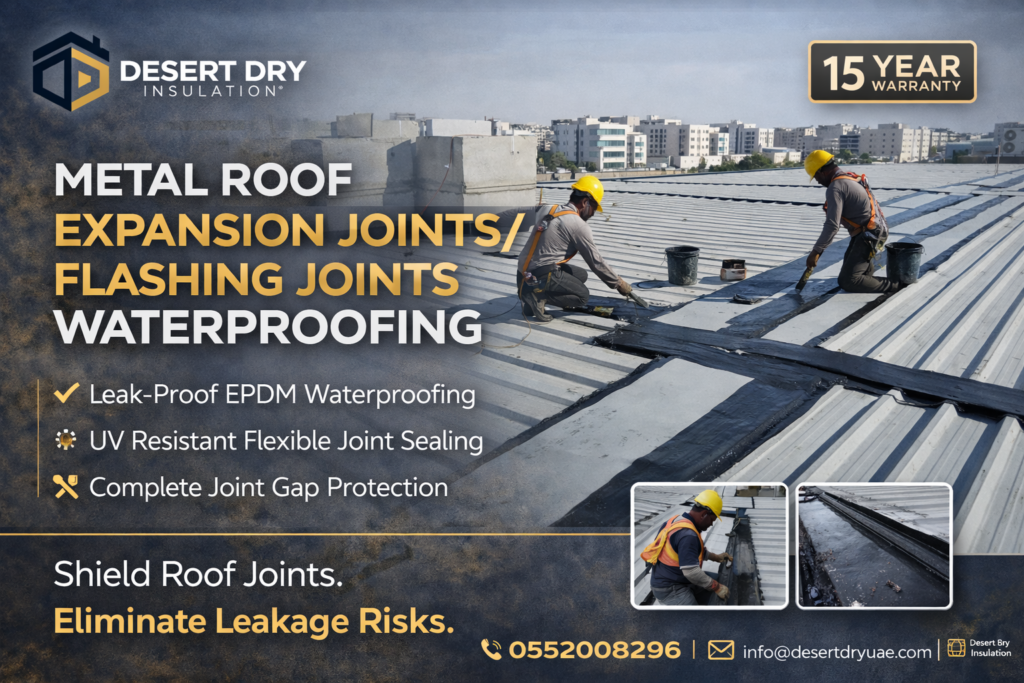
Why Metal Roof Expansion Joints / Flashing Joints Waterproofing Is Required
Metal roofs are widely used for warehouses, factories, workshops, industrial sheds, and commercial buildings because they are strong, durable, and suitable for large-span structures. But even the best metal roof can develop leakage problems if critical joint areas are not protected properly. Among the most vulnerable areas are the expansion joints and flashing joints.
At Desert Dry Insulation Work, we often find that roof leakage starts from these joint details. That is why Metal Roof Expansion Joints / Flashing Joints Waterproofing is essential for long-term roof performance and building protection.
What Are Expansion Joints and Flashing Joints?
Expansion Joints
Expansion joints are provided in metal roofs to allow movement caused by temperature changes, structural movement, and wind pressure. Since metal expands in heat and contracts in cooler temperatures, these joints help prevent stress on the roof sheets and structure.
Flashing Joints
Flashing joints are the connection points where metal flashing meets roof sheets, walls, parapets, skylights, gutters, vents, and other roof details. These joints are designed to direct water away from sensitive areas, but if they are not sealed correctly, they become common leakage points.
Both of these areas are highly important because they experience constant exposure to weather, rainwater, UV rays, and movement.
Why Is Waterproofing Required for Expansion Joints and Flashing Joints?
1. These Are High-Risk Leakage Areas
Expansion joints and flashing joints are not flat, continuous roof surfaces. They are connection points, overlaps, and moving sections. Because of this, they are more likely to develop gaps, cracks, or weak sealing over time. Waterproofing is required to prevent water from entering through these vulnerable points.
2. Metal Roofs Expand and Contract Daily
One of the biggest challenges with metal roofs is movement. Under UAE weather conditions, metal roof sheets can heat up significantly during the day and cool down at night. This repeated expansion and contraction can loosen sealants, open joint lines, and stress flashing details. Waterproofing materials used at these joints must remain flexible and durable to handle this movement.
3. Prevents Rainwater Seepage
During rainfall, water naturally finds the weakest route. If an expansion joint or flashing joint has even a small opening, rainwater can seep below the metal sheet and spread into the roof system. This may result in dripping, damp insulation, damaged ceilings, and internal leakage. Proper waterproofing seals these weak points and reduces the risk of seepage.
4. Protects the Building Interior
Leakage from roof joints can damage more than just the roof. It can affect:
Ceiling finishes
Electrical systems
Insulation layers
Stored materials
Machinery and equipment
Interior walls and partitions
For warehouses, factories, and production areas, this kind of damage can lead to costly losses and operational disruption.
5. Prevents Rust and Corrosion
Water entering through joints can remain trapped around metal surfaces, fasteners, and structural parts. Over time, this can cause rust and corrosion. Once corrosion begins, the roof system becomes weaker and more difficult to repair. Waterproofing helps stop water entry and protects the long-term condition of the metal roof.
6. Reduces Repeated Repair Costs
Many buildings suffer from repeated leakage because only temporary patchwork is done. Applying random sealant without proper treatment usually gives only short-term relief. Professional waterproofing of expansion joints and flashing joints provides a more reliable and lasting solution, reducing frequent maintenance expenses.
Common Problems Found at Expansion and Flashing Joints
These roof areas can fail for several reasons, including:
Cracked or aged sealant
Poor flashing installation
Open overlaps or loose edges
Joint movement causing separation
Rusted or damaged metal surfaces
Weak bonding of previous repair materials
UV damage from long-term sun exposure
Water ponding near flashing or joint areas
These issues can gradually worsen and become more visible during the rainy season.
Signs That Your Roof Joint Waterproofing Is Failing
Your metal roof may need expansion joint or flashing joint waterproofing if you notice:
Water dripping during rain
Damp marks near roof edges or wall connections
Rust stains around joints
Cracked sealant lines
Gaps at flashing edges
Repeated leakage from the same area
Interior ceiling stains or mold smell
Loose or lifted flashing sections
These warning signs should not be ignored.
Why Temporary Patching Is Not Enough
A common mistake is trying to stop leakage by applying surface silicone only where water is visible. In most cases, the actual entry point is deeper inside the joint or flashing detail. Temporary patching may stop leakage for a short period, but it usually does not solve the root cause.
A proper waterproofing system should include:
Detailed roof inspection
Surface cleaning and preparation
Removal of failed sealants
Joint treatment and reinforcement
Flexible waterproof membrane or EPDM treatment
Sealing of overlaps, edges, and corners
Final inspection of all weak points
This complete approach provides better long-term performance.
Best Waterproofing Solution for Metal Roof Expansion and Flashing Joints
The right waterproofing method depends on the roof condition and joint design. Professional solutions may include:
Surface Preparation
The joint area should be cleaned thoroughly to remove dust, rust, loose particles, and old failed materials. Good preparation is essential for strong adhesion.
Joint Sealing and Reinforcement
All open gaps, weak overlaps, and joint lines should be sealed and strengthened using compatible materials.
Flexible Waterproofing Systems
Since metal roofs move, the waterproofing treatment must be flexible enough to absorb expansion and contraction. Systems such as EPDM waterproofing, specialized joint membranes, or high-performance coating systems can provide durable protection.
Treatment of Flashing Corners and Edges
Special attention should be given to corners, end laps, vertical connections, and transition details. These areas are often missed during ordinary repair work.
Why Professional Waterproofing Matters
Professional waterproofing is important because expansion joints and flashing joints are technical areas that require correct treatment. Using the wrong material or poor application method can lead to repeated failure.
At Desert Dry Insulation Work, we provide practical and durable waterproofing solutions for:
Metal roof expansion joints
Flashing joints
Roof sheet overlaps
Skylight flashing details
Gutter flashing connections
Warehouse and industrial roof leakage repair
Our team inspects the leakage source carefully and applies the right system for long-lasting roof protection.
Conclusion
Metal Roof Expansion Joints and Flashing Joints are some of the most sensitive areas in any roofing system. Because these points are exposed to movement, weather, and direct water flow, they require proper waterproofing to prevent leakage, rust, and interior damage.
Ignoring these joint areas can lead to bigger repair costs, repeated water seepage, and damage to valuable property inside the building. Proper waterproofing helps extend roof life, reduce maintenance, and protect your warehouse, factory, or commercial facility.
Contact Desert Dry Insulation Work
Need expert help for Metal Roof Expansion Joint / Flashing Joint Waterproofing?
Desert Dry Insulation Work
Call / WhatsApp: 0552008296
Email: info@desertdryuae.com
Protect your metal roof joints before the next rain causes serious damage.